Sunday, June 30, 2013

TeamDrive 3 Portable

TeamDrive Portable screenshot 1 - TeamDrive Portable will help you quickly , easily and securely synchronize your data

TeamDrive Portable description

Synchronize your data quickly and securely

With TeamDrive Portable you can keep your data synchronised between various computers simply and automatically. It’s child’s play to share music, images, documents or folders of any sort with friends, family or work colleagues.

TeamDrive Portable makes it possible to create teams easily to work together on documents (online and offline collaboration). By means of the integrated version management system, all changes to documents or files are recorded automatically, so that every change can be tracked.

The security and confidentiality of your data is the highest priority for TeamDrive Portable. Before TeamDrive Portable transfers your data, they are encrypted on your computer (AES-256). Only you decide who has access to your data. TeamDrive has been awarded the Data Protection Seal of Privacy of the ULD.

An encrypted back-up copy of all of your data is automatically saved on one of TeamDrive Portable's servers. If you lose your computer or it breaks down, you can restore your data easily.

TeamDrive Portable offers two alternatives for synchronising and safeguarding your data reliably: either you can use the TeamDrive Portable servers, which means that we take care of everything, or you can use your own servers.

TeamDrive Portable makes is easier for you to manage your data, keep it secure and sync it at all times!
Here are some key features of "TeamDrive Portable":

· Synchronization of any folders and documents within a 2 GB total limit
· Automatic version management for all documents
· Automatic encryption of all data that leaves the computer
· Automatic back-up function for your data
· Offline work with automatic synchronisation
· Support for all file formats (documents, images, videos, programs)
· Team work (setting up of teams to work together on documents)
· Management of access rights for as many teams as required
· Conflict management for conflicts between versions
· Free choice of server (hosted cloud services or your own server)

Security & confidentiality:
· Data Protection Seal of Privacy of the Regional Centre for Data Protection of Schleswig-Holstein (ULD)
· EuroPrise: the European data protection and privacy seal (approval pending)
· Each space has its own secure AES-256 key (The keys always remain on the client computer)
· Individual allocation of user rights for each space

Network, hosting and server:
· The TeamDrive HTTP protocol for secure transfer outside your company, through firewall and proxy servers.
· HTTP tunnelling through Port 80
· Extended configuration options in the client (proxy / cache / bandwidth / profiles)
· Support for hosted TeamDrive cloud servers
· Support for self-hosted TeamDrive HTTP servers
· Support for compatible WebDAV servers (HTTP/S)


Waterfox 18.0.1 64 bit


Waterfox is a high performance browser based on the Mozilla Firefox source code. Waterfox is specifically for 64-bit systems, with one thing in mind: speed.
Features:
  • Compiled in Intel's C++ Compiler
  • Intel's Math Library
  • Streaming SIMD Extensions 3
  • Advanced Vector Extensions
  • Jemalloc
  • Profile-Guided Optimisation
  • /O3 Switch
  • 100% Extension Compatibility
  • 64-bit Plugin Support
  • Future Proof!

Benchmarks


GPING 2.0

GPING screenshot 1 - The main window of the application can be used to add the desired host names


GPING description

Ping multiple hosts with this easy-to-use tool

GPING, otherwise known as Graphical Ping is a Windows utility designed for network administrators and engineers gives you the possibility to ping and graph multiple hosts simultaneously.

The application comes in handy for users who need to resolve hostname and IP addresses and automatically ping multiple hosts.

The program periodically pings the added hosts over a user-defined polling interval and generates detailed graphs.
Here are some key features of "GPING":

· Export/Import host list to / from a text file
· Simultaneous PINGs to multiple hosts. (limited only by CPU memory)
· PING graphs (Hourly, Daily, Weekly, Monthly, Annual)
· Configurable polling interval and timeout
· PING data save and import
· Dashboard view to observe hosts' graphs together
· Polling wait bar feature that keeps track of polling wait cycle
Requirements:

· Internet connection
What's New in This Release: [ read full changelog ]

· Advanced options (configurable packet size, timeout, polling interval, step-size, database size, graph type and color)
· Session support to save and restore data/settings
· Modified logging and displaying algorithms. The result is fast browsing
· Domain Name System (DNS) support
· Host statistics export to file
· Save graph as image
· Windows x64 64-bit support

FCC approves Google's white space wireless database

\ Google may have been on pins and needles while the FCC scrutinized its white space wireless database over the spring, but it can relax this summer -- the FCC has given the database the all-clear. The approval lets Google serve as one of ten go-to sources for white space devices needing safe frequencies in the US. It also lets those with interference-prone devices, such as wireless microphone users, register the airwaves they consider off-limits to white space technology. The clearance won't have much immediate effect when very few Americans are using the spectrum, but it's a step forward for rural broadband rollouts and other situations where long-range, unlicensed wireless comes in handy.

Samsung Galaxy S4 cases by Urban Armor Gear hands-on

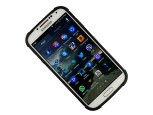
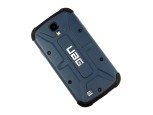
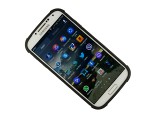
As one of the premier designers and manufacturers of rugged smartphone cases, Urban Armor Gear (UAG) has released a quartet of cases for the Samsung Galaxy S4. Available in four different colors, the covers feature a patented design with a hard outer shell and soft, impact-resistant core.
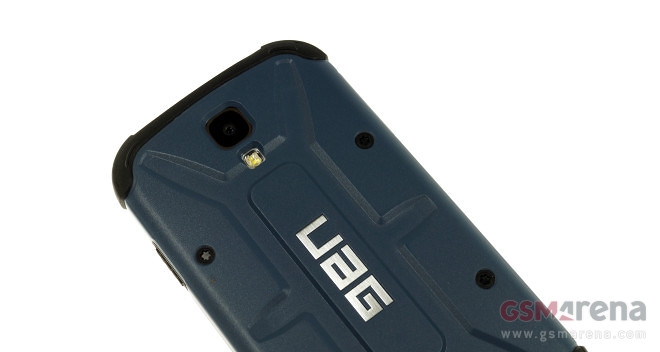
I spent some quality time with the UAG Aero and Navigator cases for the Samsung Galaxy S4. Finished in dark blue and white respectively, the duo features the same design, construction and functionality. Hit the break to learn more about the Urban Armor Gear offerings!
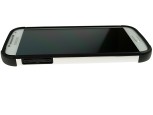
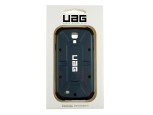
Being proper rugged cases, the UAG offerings for the Samsung Galaxy S4 cover tightly all edges of the smartphone, as well as its display by extending above it by about a millimeter. There’s a screen protector and cleaning cloth included in the retail package.
UAG Aero and Navigator Galaxy S4 cases live photos
The Samsung Galaxy S4 cases by UAG look and feel great in person. The overall finish is superb, so even the pickiest users will be hard-pressed to find anything to frown at. The profile of the covers is surprisingly thin, considering their rugged nature.
Ergonomics are impressive. The Galaxy S4’s side buttons are covered, yet light to use. All ports are open and easy to access. The same goes for the dedicated microphones on the Galaxy S4.
Furthermore, UAG’s Galaxy S4 cases also feature a design, which prevents flash glare from the camera. The task has been accomplished by slightly protruding the enclosure around the flash on the side of the camera unit.
As far as rugged cases go, Urban Armor Gear’s products should be on top of everyone’s shopping list if their budget allows. The cases are rugged, yet slim and attractive looking. Their toughness stops short from water resistance, but it offers plenty to cover the needs of just about every user out there.
Each of the Urban Armor Gear cases for the Samsung Galaxy S4 is priced at $34.95. The available colors are white, black, blue, and bright orange. You can check them all out at the Urban Armor Gear online store over here. You can also pick one up at a significant discount at Amazon.

The After Math: Microsoft fits new Windows, Sony pushes the limits of a smartphone screen

Welcome to The After Math, where we attempt to summarize this week's tech news through numbers, decimal places and percentages.
The After Math Microsoft fits new Windows, Sony pushes the limits of a smartphone screen
In recent weeks, we've covered BlackBerry, Google, Nokia, Apple, Sony and (at least gaming-wise) Microsoft, but this week, the Redmond company returned to dominate tech news, showcasing a new version of Windows 8 (and RT) at its annual Build conference. It's tried to fix some of the operating system's early criticisms and make it all a bit more accessible. They even threw in a Start button -- of sorts. Meanwhile, Sony set jacket pockets quivering, announcing its new 6.4-inch smartphone (that's not a tablet), replete with arguably the most powerful mobile processor out there. For a numerical breakdown of the week's news, follow us after the break.
  • Screen size of Sony's Xperia Z Ultra: 6.4 inches
  • Biggest Android smartphone screen in 2010: 5 inches
  • Screen size of Sony's Windows-running VAIO P laptop: 8 inches
  • BlackBerry 10 devices shipped in the last quarter (Q1 2014): 2.7 million
  • Loss made by BlackBerry in the same quarter: $84 million
  • Number of Lumia 820 phones used to create a digital wall at Build 2013: 200
DNP The After Math Microsoft fits new Windows, Sony pushes the limits of a smartphone screen
  • Keynote attendees at Build 2013 that cheered at the first mention of Bing: 1
  • Free tablets given to each Build 2013 attendee: 2
  • Number of side-by-side windows possible on a Toshiba Kirabook running Windows 8.1: 4
  • (Mis)uses of the word "literally" by Microsoft CEO Steve Ballmer during the Build keynote: 2
  • New megapixels of satellite photography recently added to Google Maps: 800,000
  • Meters per pixel within Google's new Maps images: 15
  • Years of data collected by the NSA so far during the Obama administration: 2
  • Air miles NSA whistleblower Edward Snowden could have earned in his escapade (Honolulu to Hong Kong to Moscow): 9,988

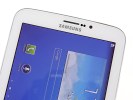
Samsung Galaxy Tab 3 7.0 stops by, poses for the camera

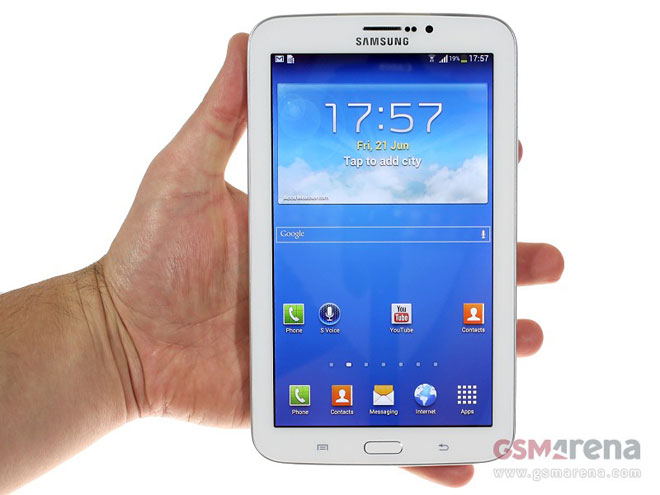
The budget 7″ Android tablet market has been enjoying quite a lot of attention from a number of manufacturers and the latest device to join in on the fun is a refresh of one of the very first small tablets – the Samsung Galaxy Tab 3 7.0.

The third-generation of 7″ Galaxy Tab has just hit the shelves and it feels nicely polished and put together. It’s not quite the performance champion, sporting the little known Marvell chipset with 1.2GHz dual-core Cortex-A9 CPU, 1GB of RAM and 8GB of internal storage, which fortunately is expandable by a maximum of 64GB.

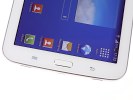
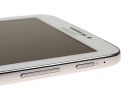
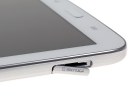
The design of the Samsung Galaxy Tab 3 7.0, unsurprisingly, is heavily inspired by the Galaxy S4 and features a physical Home button with capacitive menu and back keys on each of its sides. On the left side there are the SIM card and microSD card slot, while on the right we find the volume rocker, power button as well as an IR blaster, which our prototype didn’t yet have.
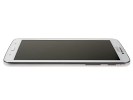
Built entirely out of plastic, the Galaxy Tab 3 7.0 is quite prone to fingerprints, so it’d need an occasional cleaning to maintain its looks. On the positive side, Samsung has made the bezels thinner than the previous generation 7″ Galaxy Tab. It’s lighter as well weighing 300 grams, while measuring 110.9 x 187.9 x 9.9mm.

At the back, there’s a 3MP snapper sans LED flash, but that’s not such a drawback, since the camera on the Galaxy Tab 3 7.0 should be used only as a last resort. However, at the front, there’s a 1.3MP one, that’s going to be great for video chatting sessions. Next to it are located the proximity and ambient sensors.
Unfortunately, the display is nothing to write home about. It’s a TFT unit with an uninspiring resolution of WSVGA (1024 x 600) and is basically the same as the previous generation of the slate.
We’ve thrown in a quick hands-on video to get wet your appetite until we finish working on our extensive


The Samsung Galaxy Tab 3 7.0 is already on sale in Europe for about €200 and is bound to hit the US in early July with a price of $199. Our preview should come some time this week so stay tuned.

BSkyB wins trademark case against Microsoft over SkyDrive name


While many can tell the difference between Sky TV services and Microsoft's SkyDrive cloud storage, that's not necessarily true for everyone. A British court certainly thinks there's room for confusion: it has ruled that SkyDrive infringes BSkyB's trademarks on the Sky name in both the UK and the European Union. The presiding judge didn't believe that Microsoft's use of the "sky" prefix was absolutely necessary, and she showed evidence that at least some of the general public didn't understand which company made what. Microsoft says it plans to appeal the verdict, although there's no guarantee that it will have to relabel SkyDrive if the appeal falls through. Some past trademark lawsuits have led to fines instead of name changes, and we suspect Microsoft would rather pay out than lose brand recognition across a whole continent.
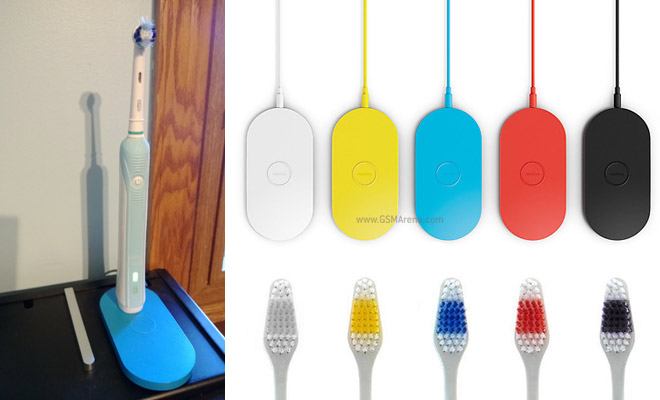
Wireless Charging Plate can charge both your Lumia and your toothbrush

Wireless charging is slowly gaining traction with smartphone makers. But here’s an unexpected use – it can also help with your dental hygiene.

No, really – inquisitive Reddit user el_n00bo_loco decided to put his electric toothbrush on top of a Nokia Wireless Charging Plate (like the one we reviewed the other day).
It’s good to see that a £55 / €68 charging gadget can be used for more than just charging your phone.
The Charging Plate uses the Qi standard, which is quite popular – it’s used by other phones that support wireless charging along with third-party add-ons for those that don’t, but also for things like game console controllers, wireless speakers and so on.

Vine app now available on Kindle Fire

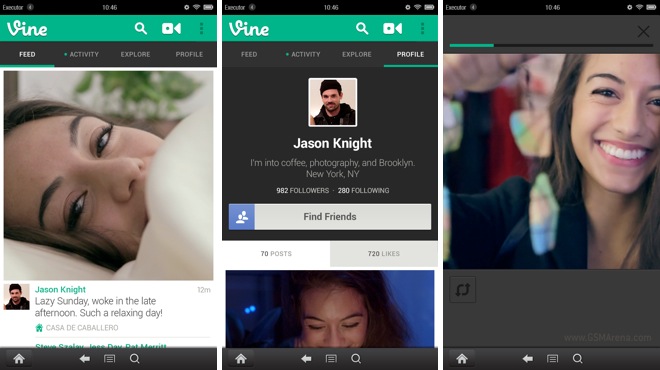
After releasing on the Google Play Store recently, the Vine app is now available on Kindle Fire. The app requires Android 4.0 and above, so can work on every version of the Kindle Fire, except for the very first model.

For those who are not aware, Vine is a new social networking service for sharing short, six second videos. It used to be known as the Instagram of videos, until recently when Instagram itself added support for videos. The Vine app for Kindle Fire is the first tablet version of the app, as it is only available on smartphones on iOS and Android. Having said that, the UI is similar to the Play Store version of the app and not really optimized for the big screen as such.
The launch of the Vine app for Kindle Fire comes as a surprise, since the app took over four months to arrive on Android after its iOS debut. With Instagram now quickly becoming the preferred choice for sharing videos, Vine seems to be more than willing to expand to other platforms. Who knows, we may see a Windows Phone version of Vine shortly.
Download

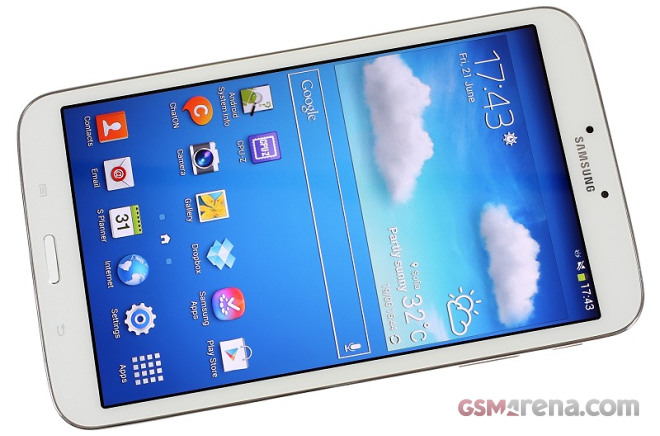
Samsung Galaxy Tab 3 8.0 hits our office, hands-on video is inside

Samsung Galaxy Tab 3 8.0 is arguably the most interesting of the latest generation Samsung slates. It’s an affordable dual-core tablet running on the latest Android 4.2 Jelly Bean OS and the 1280 x 800 pixel resolution isn’t as big an issue as it is on the 10″ screen of the Galaxy Tab 3 8.0. Samsung’s proprietary TouchWiz is on top, of course, full of useful apps and services.

The SamsungGalaxy Tab 3 8.0 is a thinner, lighter and S-Pen-less version of the Galaxy Note 8.0. It’s cheaper too, so you may be willing to forgive the less capable chipset.
And even though the Galaxy Tab 3 8.0 comes two processor cores short of the Galaxy Note 8.0, it still handles the Android OS and even the heavy apps without hiccups. We’ve prepared a short hands-on video for you to check out.


We are already working on a full-blown review and you can expect it to appear on our homepage soon.

Inhabitat's Week in Green: cardboard bicycle, robo raven and a steampunk Lego ship

Each week our friends at Inhabitat recap the week's most interesting green developments and clean tech news for us -- it's the Week in Green.
DNP Inhabitat's Week in Green
Summer is finally upon us, and polluting companies are feeling the heat as President Barack Obama announced a groundbreaking climate action plan this week that calls for cutting CO2 emissions and building more resilient communities in the face of climate change. Meanwhile, innovators around the world are continuing to tackle some of our biggest challenges. Rust-Oleum launched NeverWet - an incredible new spray that can completely waterproof any surface or object. IKEA unveiled a new solar-powered flat-pack shelter that could be easily deployed as emergency housing. Cardboard Technologies announced plans to mass-produce a $10 bicycle made almost entirely from recycled cardboard. And in one of the week's most exciting green transportation developments, England's Drayson Racing set a new land speed record for electric cars this week, shattering the previous mark by nearly 30 MPH.
It's only July, but 2013 has already been a banner year for Tesla Motors. Now, rumors are starting to circulate that Google will make a bid for the electric car company. In other green transportation news this week, inventor Chip Yates announced plans to fly an electric airplane nonstop from New York to Paris. A Volkswagen Passat TDI set a new world record by achieving 77.99 MPG in a 48-state drive -- the best fuel economy ever for a non-hybrid car. High Speed 2 released the first images of England's new 225 MPH bullet train, and in New York City, Inhabitat speculated on how parked Citi Bikes could be used to generate energy. Inhabitat also teamed up with Linus Bikes to give one lucky reader a bike worth $645.
In an effort to create a better, longer-lasting bike light, Dutch company Rydon created a new solar-powered bike light that can be permanently mounted to any bike frame. Fashion designer Pauline van Dongen unveiled a prototype for a new coat that features a series of solar-powered flaps that unfurl in the sunlight. A pair of researchers at the University of Maryland Robotics Center developed a robo raven that is able to fly by flapping its wings independently of one another. DJ and turntablist Kid Koala released an album that comes with a working DIY cardboard record player that you can assemble yourself. And Lego builder Jason Alleman built a steampunk Lego ship that can crawl around on spiderlike legs.

Apple trademarks new FaceTime logo, settles on green


There's certainly been a lot of brouhaha surrounding the new design language Apple introduced for iOS 7 at WWDC. Some (ourselves included) feel it's modern and fresh while others loathe the brighter palette and simpler, flatter icons. A lot can change between now and the launch of iOS 7 this fall, but if Apple's recent trademark filing is any indication, FaceTime's new logo / icon -- which consists of a stylized white video camera inside a rounded-off green square -- fits squarely (ahem) within the aesthetic we saw on stage in San Francisco. Of course, companies often trademark logos, so we can't really say this comes as much of a surprise, either. If you're curious where Jony Ive might have found his inspiration for the pastel colors and thin lines showcased in iOS 7's iconography, check out Otl Aicher's design work for the 1972 Olympics in the "more coverage" link after the break.

University of Michigan activates antimatter 'gun,' cartoon supervillians twirl moustaches anew

Scientists create tabletop antimatter 'gun,' cartoon supervillians twirl mustaches anew
At the University of Michigan, an international team of physicists has begun experimenting with its tabletop-sized super laser, modding it into an antimatter "gun." It's not quite a black hole-firing pistol, but we're slightly terrified nonetheless. Up until now, machines capable of creating positrons -- coupled with electrons, they comprise the energy similar to what's emitted by black holes and pulsars -- have needed to be as large as they are expensive. Creating these antimatter beams on a small scale will hopefully give astrophysicists greater insight into the "enigmatic features" of gamma ray bursts that are "virtually impossible to address by relying on direct observations," according to a paper published at arXiv. While the blasts only last fractions of a second each, the researchers report each firing produces a particle-density output level comparable to the accelerator at CERN. Just like that, the Longhorns/Wolverines super-laser arms-race begins again.

Washington Post reveals new PRISM slides, offers greater clarity into the US' surveillance operation

Washington Post reveals new PRISM slides, offers greater clarity into the US surveillance operation
PRISM: The surveillance story that started with four leaked slides from the Washington Post, today gets a bit clearer. The publication has revealed four more annotated slides about the once-secret NSA operation, along with detailing the various levels of scrutiny from the FBI and NSA that happen before, during and after approved wiretaps take place. It seems that many of the measures make sure the warrantless data mining of US citizens occurs to the smallest extent possible and that FISA rules are followed -- still unsettling, nonetheless.
Detailing the process further, NSA analysts perform checks with supervisors to be certain intended targets are foreign nationals who aren't on US soil; approval is provided by way of "51-percent confidence" in assessments. During a "tasking process" search terms are entered, dubbed "selectors," which can tap into FBI gear installed within the private properties of participating companies -- so much for those denials. For live communications, this data goes straight to the NSA's PRINTAURA filtering system, while both the FBI and NSA scan pre-recorded data independently. Notably, live surveillance is indeed possible for the likes of text, voice and and instant message-based conversations, according to a slide that details how cases are notated. It's also worth mentioning that much of the collected metadata comes from programs outside of PRISM, as WP points out.
PRINTAURA is an overall filter for others, like NUCLEON for voice communications and MAINWAY for records of phone calls. Another two layers beyond that, called CONVEYANCE and FALLOUT, provide further filtering. Again, all of these checks apparently fine-tune results and help make sure they don't match up with US citizens. Results that return info about those in the US get scrapped, while those that have info about foreign targets mixed with US citizens get stored for up to five years. A total number of 117,675 active targets were listed as of April 5th, but the paper notes this doesn't reflect the amount of data that may also have been collected on American citizens. If you haven't already, now might be a great time to catch up on this whole PRISM fiasco to learn about how it might affect you. You'll find all the new slides and more detailed analysis at the source links.

Saturday, June 29, 2013

UK consumers say the Galaxy S4 is the fastest smartphone with best battery life

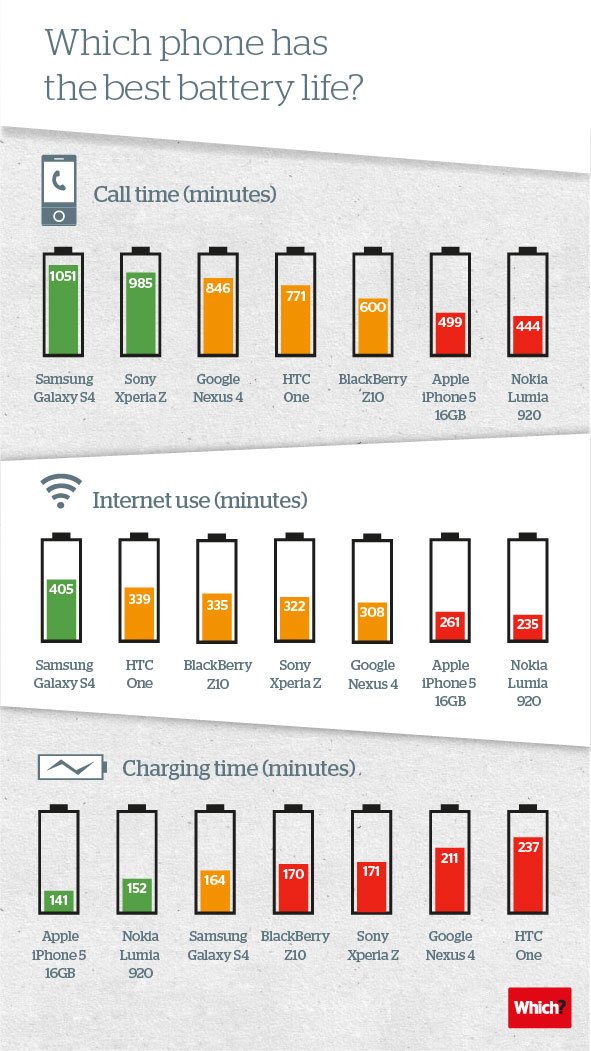
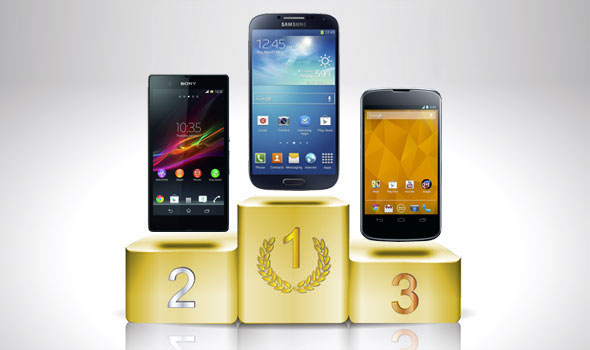
The Samsung Galaxy S4 has won two award from UK consumer research company Which?. It found that Samsung’s Android flagship is not only the fastest smartphone currently on sale, but also the one with the best battery life.

Which? determined this by running the Geekbench 2 benchmark on selected smartphones. The Galaxy S4 got on top with 3188 points with the HTC One sitting in the second place with 2798. We also confirm this in our own benchmark results of the Galaxy S4, which you can check in our extensive review of the smartphone.
As far as battery test, the Galaxy S4 wins the gold as well with best call time and internet usage results. The Which? consumer research company uses its own phone network simulator, which ensures that the signal strength is the same every time.
And here’s a cool mini-infographic showing the battery performance of the tested devices.

Alt-week 6.29.13: DARPA's robot finalists, the IRIS solar mission and empathetic computers

Alt-week takes a look at the best science and alternative tech stories from the last seven days.
Altweek 62913 Darpa's robot finalists, IRIS solar mission launch and computers that feel your pain
Sure, DARPA is slightly sinister, but it's so into robots that we're willing to let that slide. In fact, last year it launched the DARPA Robotics Challenge, and it just announced the top six nine seven teams to advance. But if just the idea of figuring out robotics frustrates you, NC State's face tracking program literally gets that, and NASA just launched the IRIS solar probe from the belly of a transport jet. It's Alt-week, baby.


Remember DARPA's Robotics Challenge (DRC) launched to create 'bots that would look like humans and perform real world tasks? Well, the military's skunkworks division just announced that its winnowed down the original 26 teams to seven after completion of the Virtual Robotics Challenge (VRC) phase. To test them, DARPA created a cloud-based simulator, which teams used to simulate vehicle egress and driving, walking on rough, muddy terrain, attaching a hose to a spigot and turning a valve. While DARPA was planning on having six finalists, it turned out that JPL (which already has a DARPA-funded project and its own robot), decided to drop out and donate its resources Lockheed Martin's Trooper entry. At the same time, Team K from Japan and Case Western University pooled their resources and also received a donated ATLAS robot from Hong Kong University. In the spirit of good sportsmanship, DARPA decided after all that to keep seven teams, which will get an actual Boston Dynamics Atlas robot and more funding for the final DRC trials. Since that will no doubt produce the kind of entertainment we saw earlier this year at Engadget Expand, we can't wait.


NASA launches are always a hoot, even its so-called Small Explorer Missions. The IRIS solar observer is one of those, and was lofted into space on Thursday from an Orbital Sciences Pegasus rocket, which itself separated from the underside of a converted Lockheed L-1011 jet at around 40,000 feet. Now that it's in orbit at about 400 miles, IRIS (Interface Region Imaging Spectrograph) will begin observing solar material that transits a poorly understood region between the sun's photosphere and corona, causing solar winds and driving the million-degree atmosphere. It'll use an ultraviolet telescope built by Lockheed Martin to do that during its two year mission, which one day may improve solar forecasts and explain some of the bizarre tantrums occasionally thrown by our star.
Altweek 62913 DARPA's robot finalists, IRIS solar mission launch and computers that feel your pain
Confused? That's a common issue for students learning computer science, and while in-the-flesh profs can easily see your anxious state, machines have no such empathy. Researchers from North Carolina State University want to change that, so they developed software that tracks facial expressions in order to predict the emotions of students during online tutoring sessions. Called JavaTutor, the program correctly sussed out moods 85 percent of the time and "will not only respond to what a students knows, but to (his or her) feelings of frustration or engagement," according to assistant professor Dr. Kristy Boyer. That'll lead to the next stage of research -- providing both "cognitive and emotion-based feedback to students" during learning sessions, which the scientists claim could have a dramatic effect on retention. Sounds good, but if you put that together with DARPA's project above, the result could be a scary-looking robot that senses your fear.

PSA: Google Play Music All Access $8 promotion ends soon

Image
Listen, we're all for waiting until the last possible minute, but that time is now. If you happen to be looking for a deal on Google's fancy new music service, the clock is ticking. Once June 30th rolls around, Google Play Music All Access's $7.99 price tag will bump up to the standard $9.99 a month. That's a full $2 a month more for access to those millions of unlimited songs. You can sign up at the source link below -- that same page can also hook you up with a free 30-day trial, if not paying money is your thing.

AIMP 08.02.2013 beta

AIMP is a full-featured free music player designed with sound quality and wide,
customizable functionality in mind. Over twenty audio formats are supported.
This is one of the best music players you can find on the Internet.
Audio is processed in 32-bit for crystal-clear sound. The player features a 18-band
graphics equalizer with extra built-in sound effects. You can extend the existing
functionality adding Input, DSP and Gen plug-ins from Winamp. All local and global
hotkeys are customizable. Full Unicode support. You can convert AudioCD to MP3,
OGG, WAV or WMA. Similarly, you can grab sound from any audio device on your
PC to MP3, OGG, WAV or WMA formats. 
Simply try to compare AIMP with competitor websites that have the option to download
a free music player and you will be surprised by quality and features of AIMP.

Aimp3

KanKan 360

One of the best freeware programs in the browse photos and images zoom without interference and with a tool to browse the pdf files

and i Will be translated into English

Google Chrome 27.0.1453.116 Stable

Get a fast, free web browser

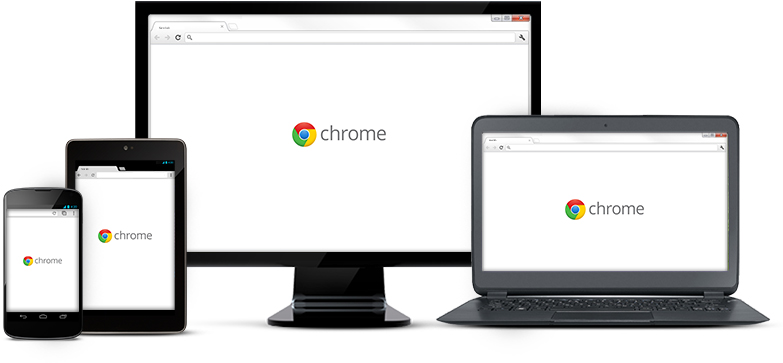
One browser for your computer, phone and tablet

From google


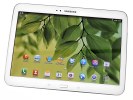
The Samsung Galaxy Tab 3 10.1 drops in for a hands-on

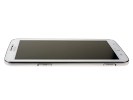
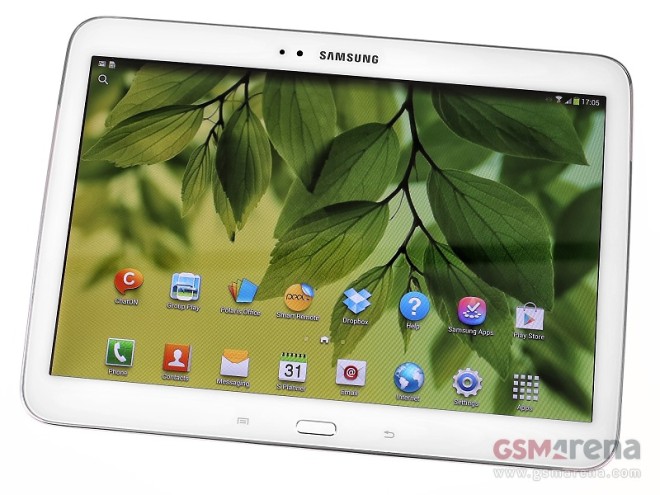
The Samsung Galaxy Tab 3 10.1 is the largest member of the new Tab 3 lineup, and it has stopped by our studio for a quick hands-on before it gets whisked away for a full review.

The Galaxy Tab 3 10.1 is one the first Samsung tablets to run on Intel’s new Atom Z2560 chipset, and we’re eager to see how it fares under Samsung’s Android Jelly Bean build with TouchWiz optimizations.
The Atom processor is of the dual-core 1.6GHz variety, and is joined by 16/32GB of internal memory, 1 GB of RAM, and a 3 MP camera capable of 720p video recording in the list of highlights. The 10.1-inch display stretches the 1280 x 800 pixel resolution rather thin, but otherwise the image quality is rather nice with excellent contrast, bright colors, and good viewing angles.

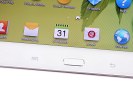
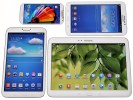
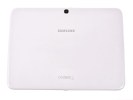
Samsung Galaxy Tab 3 10.1 studio pics
The tablet runs Android 4.2.2 Jelly Bean with all the usual TouchWiz optimizations from Samsung. Check out this brief hands-on video we’ve shot:


The Samsung Galaxy Tab 3 10.1 has some very enticing features, particularly when you consider its low price point, but will the low screen resolution ruin the deal and how will the Atom processor fare. We’ll delve into those further in our full review, where we’ll put it through our usual ringer of benchmarks and performance tests. Stay tuned!

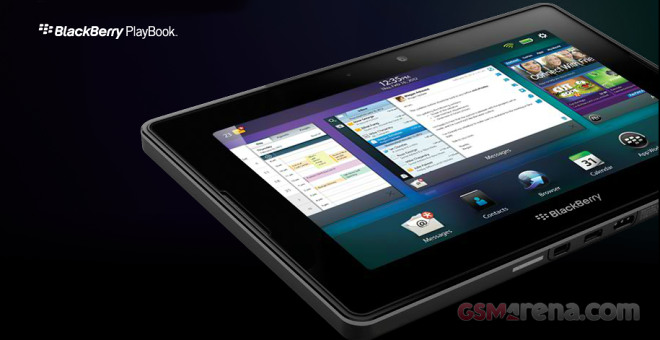
U-Turn: BlackBerry PlayBook won’t get BlackBerry 10 update

Today is certainly not a good day for the BlackBerry fans. Earlier CEO Thorsten Heins reported disappointing earnings results for the last quarter. The company did manage to increase its revenue, but it didn’t meet profit expectations, in fact its operating loss is $84 million. Because of the bad financial report the company’s stock tumbled down over 25% at time of writing.

During the financial results conference call BlackBerry delivered another portion of bad news – there will not be BlackBerry 10 update for the PlayBook slates.
Back when BlackBerry 10 was announced, CEO Thorsten Heins promised that the existing PlayBook tablets will get to enjoy the latest version of the platform. There was no explanation for the change of heart, but we bet this is the first of many steps aiming to reduce the company’s operating costs.

Nokia films European Man of Steel premiere with Lumia 925


Don’t worry – no spoilers here! If you haven’t seen Man of Steel yet you should know that Nokia had arranged some product placement deals with the movie producers and has even arranged to have a first-class ticket to the European premiere of the movie.

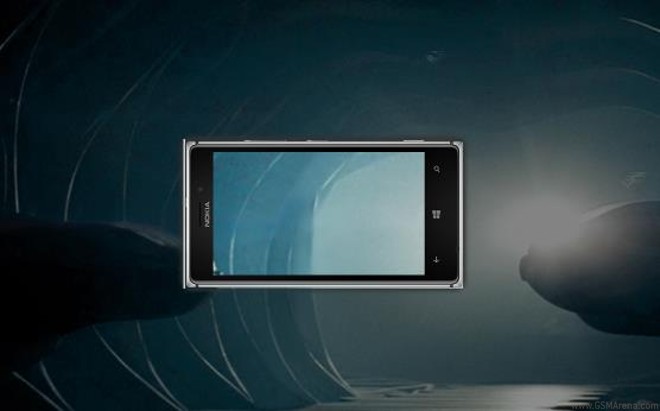
Along with starts Henry Cavill, Russell Crowe and Kevin Costner comes the Nokia Lumia 925 and, more importantly its 8.7 MP PureView sensor. Nokia made a coverage video of the premiere using only Nokia Lumia 925s (a lot of them) – check it out.
The video is quite nice although there has obviously been some quite some post-processing so we are not sure how much of the credit should go to the Lumia 925.


You can also download the Man of Steel app, share photos to show the way you see the world as the Man of Steel and you can win tickets to the movie.

We take the Samsung Galaxy S4 Android 4.3 ROM for a spin, here’s the video

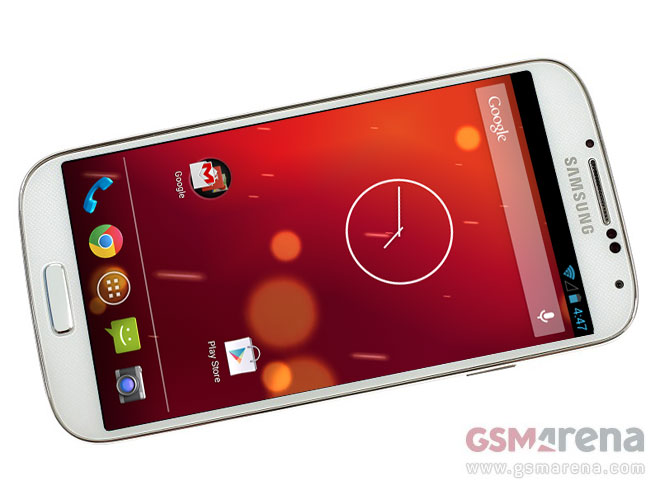
When Google’s Hugo Barra announced at the Google I/O 2013 that the Samsung Galaxy S4 will be offered directly from the Play Store as a “Google Play Edition” device running stock Android, many people got really excited. Later on, HTC also jumped on the bandwagon with the HTC One, giving you a choice between two excellently spec’d smartphones that offer the Nexus experience.

As planned, the devices went on sale on June 26 and almost immediately, an alleged Galaxy S4 I9505G unit was discovered that runs on the yet unannounced Android 4.3 Jelly Bean instead of the official Android 4.2.2 Jelly Bean. Shortly after, a ROM that any regular Galaxy S4 owner with a Snapdragon 600 (yes, including the regular TouchWiz version) can flash popped up.
And here we are today, presenting you a Samsung Galaxy S4 (I9505) turned into a Samsung Galaxy S4 Google Play Edition (I9505G) running the leaked ROM 4.3. So, how does it feel and what’s new?
Right after you power on the stock Android-loving Galaxy S4, you notice the new Android boot animation with the Google logo prominently flashing. Then, you’re greeted with a special-made live wallpaper for the Google Play Edition duo dubbed Sun Beam. It’s essentially the same as the Phase Beam, but is done in fire red. Welcome to stock Android 4.3 territory.
Depending on where you come from (TouchWiz 4.2 or vanilla Android 4.2) the user interface can feel either completely different or virtually unchanged. There are five homescreen panes that can’t be deleted nor moved like on the rest of the Nexus family. The notification drawer still has a shortcut for the quick settings and the bottom dock holds four customizable app shortcuts and the app drawer icon. In a word – stock Android user interface.
However, there are a few changes here and there. Google Keep for example now comes preloaded, as does Google Hangouts (replacing Google Talk). Google Now is now at version 2.6.7.721924 and as now comes with support for two new types of cards – TV and Offers.

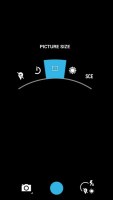
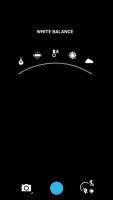
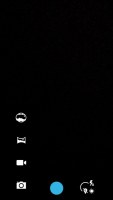
Android 4.3 new camera UI
The other notable change is the new camera interface, which is much more usable. When you tap on the screen to change the settings, there’s a new arch above your finger that shows the quick settings – HDR, Exposure, Flash and jump to the front-facing camera. There’s a settings button, too, which shows more options in a similarly visual fashion.
We’ve made a hands-on video of the Samsung Galaxy S4 Google Play edition running Android 4.3 Jelly Bean. Check it out below.


It’s not known at this point if this leaked Android 4.3 that’s running on our Galaxy S4 is even real – it might be an elaborate prank by a skillful developer who fused the leaked camera and gallery apps to the regular 4.2 ROM of the Galaxy S4 Nexus edition and modded the about screen to say 4.3. Or it might be targeted at OEMs to give them time to prepare their custom Android builds with the latest APIs.
We’ll know soon enough, as Google and people more familiar with the inner workings of Android speak out. Either way, the ROM is performing nicely, so at the very least it will give you a chance to make turn your regular Samsung I9505 Galaxy S4 into a Google Edition one in a few easy steps.